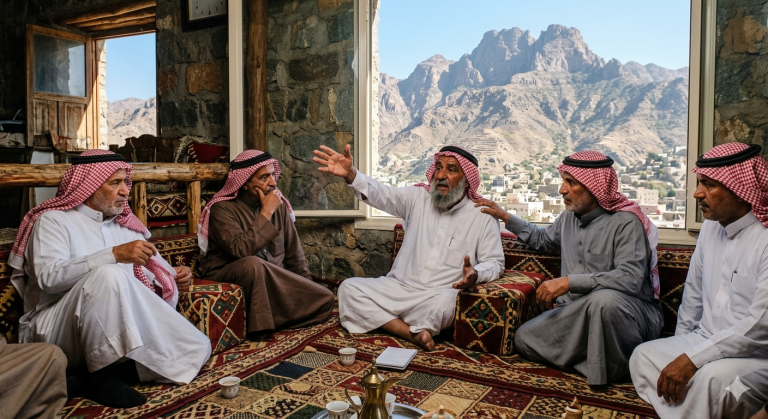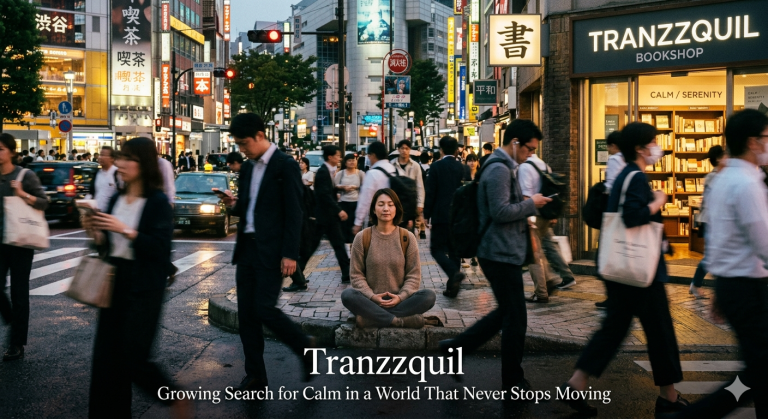
In an era defined by polarization, extremism, and the constant pull toward ideological edges, the Islamic concept of Wasatha offers something genuinely valuable: a principled, spiritually grounded framework for living and governing with balance, justice, and wisdom. Derived from the Arabic word Wasat meaning middle or center, Wasatha is not a mere compromise between extremes but a deliberate, virtuous commitment to the middle path — one that Islamic theology presents as a divine mandate and a moral ideal.
Table of Contents
The Quranic and Theological Foundation of Wasat
The concept of Wasat finds its clearest expression in the Quran. In Surah Al-Baqarah (2:143), Muslims are described as Ummat Wasatan — a middle or balanced community — chosen to be witnesses and exemplars for humanity. Islamic scholars across centuries have interpreted this verse as a defining characteristic of the Muslim community’s role in the world: not rigid and extreme on one side, nor lax and indifferent on the other, but grounded in knowledge, justice, and measured wisdom.
The Oxford Islamic Studies Online describes Wasatiyya — the broader tradition of moderation derived from Wasat — as a central strand of classical Islamic ethics that encompasses personal conduct, religious practice, legal reasoning, and political philosophy. This is not a modern reinterpretation but a deep-rooted tradition that stretches across the full breadth of Islamic intellectual history.
Wasatha in Personal and Social Life
At the personal level, Wasatha calls for balance in every dimension of daily life. In worship, it means devotion without fanaticism. In personal health, it means caring for the body without obsession or neglect. In relationships, it means generosity without wastefulness, firmness without harshness, and trust without naivety. The principle functions as a practical compass for navigating the complexities of human experience with steadiness and wisdom.
Socially, Wasatha provides a framework for pluralism, dialogue, and civic engagement. It rejects the false choice between tradition and modernity, between faith and reason, or between community belonging and individual rights. Instead, it proposes an integrated approach that honors all of these values simultaneously, guided by informed judgment and sincere ethical commitment.
Wasatha as a Counter to Extremism
One of the most important applications of Wasatha in contemporary Muslim discourse is its role as an intellectual and ethical counter to extremism and radicalism. Scholars, religious leaders, and Muslim governments in countries including Malaysia, Jordan, Egypt, and the United Arab Emirates have formally adopted Wasatiyya as a guiding framework for religious education, preaching guidelines, and national identity programs.
These efforts recognize that extremism does not arise in a vacuum but often feeds on theological misunderstanding, social grievances, and the absence of credible, moderate religious voices. By actively teaching and promoting Wasatha, these societies are making a principled argument that authentic Islamic teaching leads not toward violence or rigidity but toward balance, contribution, and coexistence.
The Universal Resonance of the Middle Path
While Wasatha is rooted in Islamic theology, its core message resonates with a universal human aspiration. The idea of the middle path, avoiding destructive extremes in favor of balance and wisdom, appears across human philosophical and spiritual traditions from Aristotle’s doctrine of the mean to Buddhist teachings on the middle way. In this sense, Wasat speaks not only to Muslims but to any thoughtful person committed to a more just and balanced world.
Frequently Asked Questions (FAQs)
Q1: What is the literal meaning of Wasat?
Wasat is an Arabic word that literally means middle, center, or moderate. In Islamic theology and ethics, it has come to represent the principle of moderation, balance, and the virtuous middle path between harmful extremes.
Q2: Where does the concept of Wasatha appear in Islamic scripture?
The most prominent Quranic reference appears in Surah Al-Baqarah (2:143), where Muslims are described as Ummat Wasatan, meaning a middle or balanced community. Islamic scholars have built an extensive ethical tradition around this verse and related prophetic narrations.
Q3: Is Wasatha relevant in modern political contexts?
Very much so. Multiple Muslim-majority countries have formally incorporated Wasatiyya into national religious education and governance frameworks as a principled alternative to extremism. It is also widely discussed in interfaith dialogue, democratic theory, and human rights discourse within Muslim intellectual circles.
Q4: How is Wasatha different from moral relativism?
Wasatha is not moral relativism. It is a principled ethical stance grounded in clear values and informed reasoning. It does not suggest that all positions are equally valid but rather that genuine wisdom requires proportionality, contextual awareness, and justice — applied with knowledge and integrity, not indifference.