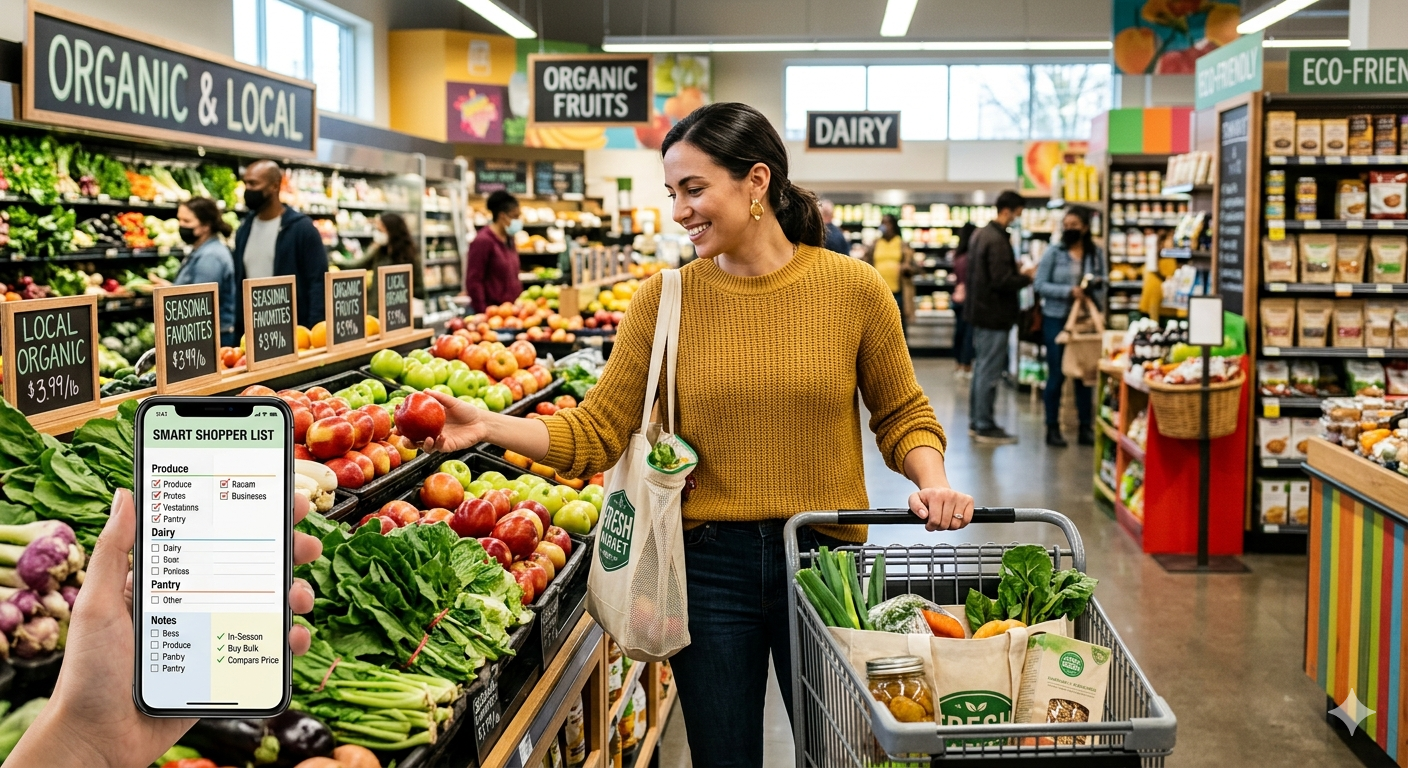
Walking into a supermarket without a strategy is like navigating a maze blindfolded. Modern supermarkets are expertly engineered retail environments designed to maximize your time inside and encourage spending beyond your original intention. Yet for the prepared shopper, the supermarket is also one of the best places to stretch a budget, discover quality products, and feed a household efficiently. This comprehensive guide covers everything you need to know about supermarket shopping — from understanding store layout psychology to reading labels, saving money, reducing food waste, and making healthier food choices consistently.
Table of Contents
How Supermarkets Are Engineered to Influence You
Every detail inside a supermarket, from the temperature of the air to the height of the shelving, is the result of carefully studied consumer behavior research. Major retail chains invest heavily in store design to ensure shoppers spend as much time — and money — as possible.
Fresh produce and bakery sections are almost always positioned near store entrances. The warm aroma of baked goods stimulates appetite and creates a sense of freshness and abundance that puts shoppers in a positive, relaxed buying mood. Essentials like eggs, milk, and bread are placed at the farthest points from the entrance, ensuring customers pass through as many aisles as possible. This deliberate layout maximizes the chance of picking up unplanned items along the way.
Eye-level shelves are valuable advertising space. Brands that pay for these premium positions typically earn significantly higher sales volumes than equivalent products on lower shelves. Store-brand and budget alternatives are usually found on the bottom shelf. Before automatically reaching for the product at eye level, scan the entire shelf range — the best value is often sitting right at floor level.
Supermarkets also use large shopping cart sizes to encourage you to fill them, wide aisles to slow walking pace, and strategically placed promotional displays at aisle ends to intercept shoppers mid-journey. Knowing these tactics gives you a meaningful psychological advantage on every shopping trip.
Building the Perfect Shopping List
Plan Your Meals Before You Shop
A meal plan is the foundation of efficient supermarket shopping. Spending 15 to 20 minutes on the weekend deciding what your household will eat across the coming week has a transformative effect on your shopping behavior. When you know exactly which meals you are preparing, your shopping list becomes a precise tool rather than a vague reminder. You buy only what you need, waste less food, and avoid the panic buying of convenience items mid-week.
Begin each meal plan by checking what is already in your refrigerator, freezer, and pantry. Use those ingredients as building blocks for your planned meals before adding new items to your list. This single habit can reduce weekly grocery spending noticeably over a month.
Organise Your List by Store Section
Group the items on your shopping list by the sections of the store — produce, deli, dairy, meat, frozen, dry goods, cleaning, and personal care. This approach prevents backtracking through aisles and reduces the temptation to browse sections you have already passed. A well-organized list can cut your in-store time in half.
Decoding Supermarket Pricing and Promotions
Supermarket pricing strategies are sophisticated. Promotional mechanics such as multi-buy offers, limited-time discounts, and bundle deals are engineered to increase spend per transaction, not necessarily to save you money. A ‘buy two get one free’ offer only represents genuine value if you will actually use all three items before they expire.
Unit pricing is your most powerful tool for cutting through pricing complexity. Most supermarkets are legally required to display the price per unit of measure — per 100 grams, per liter, or per item — on shelf edge labels. Always compare unit prices across sizes and brands before selecting a product. A jumbo pack is not always cheaper per unit than a standard size, especially for perishable products where the risk of waste is real.
Loyalty programs are genuinely worth using. Major supermarket chains offer reward points, personalized discounts, and members-only pricing through their apps and loyalty cards. These programs cost nothing to join and can result in meaningful savings, particularly on products you purchase regularly. Activating digital coupons before your shopping trip through the supermarket’s app is a quick habit that pays dividends over time.
Reading Supermarket Product Labels Intelligently
The front of a food package is marketing territory. Claims such as ‘natural,”wholesome,”light,”multigrain,’ and ‘farm-fresh’ are largely unregulated marketing terms that tell you very little about the actual nutritional content of the product. The information that matters is on the back — in the Nutrition Facts panel and the ingredient list.
When reading the Nutrition Facts panel, always check the serving size first. Many products list nutritional data for a serving that is smaller than what people actually consume in one sitting, making the product appear healthier or lower in calories than it really is. Pay close attention to added sugar, sodium, saturated fat, and fiber content, as these have the strongest influence on long-term health.
For authoritative guidance on how to read and use nutrition labels correctly, the U.S. Food and Drug Administration provides a detailed public resource.
Authority Resource: FDA Nutrition Facts Label Guide — a comprehensive official guide to understanding what is in your food.
Smart Strategies for Reducing Food Waste
Food waste is one of the largest hidden costs in any household budget. Research consistently shows that the average family discards a significant percentage of the food it purchases each week — money literally thrown in the bin. Smart supermarket shopping is the first line of defense against this waste.
Buy fresh produce in quantities you will realistically consume before it spoils. If you find yourself regularly throwing out wilted vegetables or moldy fruit, reduce the quantity you purchase per trip and shop more frequently. Frozen vegetables and fruit are nutritionally equivalent to fresh options and have a dramatically longer usable life, making them an excellent choice for ingredients you use occasionally rather than daily.
Learn the difference between ‘use by’ and ‘best before’ dates. Use by dates are safety thresholds — do not consume food past this date. Best before dates indicate peak quality, not safety. Many products are perfectly safe and palatable well beyond their best before date. Supermarkets often mark down items approaching their best before date to clear stock. Purchasing these items and either using or freezing them the same day is one of the most effective ways to access quality food at a fraction of the regular price.
Healthy Shopping on a Realistic Budget
The perception that eating healthily is expensive is largely a myth when you shop strategically. Whole grains, legumes, eggs, frozen vegetables, seasonal produce, and canned fish are among the most affordable and nutritious foods available in any supermarket. Building meals around these core ingredients, supplemented by fresh proteins and dairy, produces a diet that is both nutritious and cost-effective.
Shopping the perimeter of the supermarket — where fresh produce, dairy, and protein are typically stocked — and limiting time in the central aisles where heavily processed, packaged foods dominate is a widely recommended strategy for both health and budget goals. The central aisles are also where the most heavily marketed products with the highest profit margins for retailers are concentrated.
Frequently Asked Questions
Q1: What is the best day and time to shop at a supermarket?
Tuesday through Thursday mornings, between 8 AM and 11 AM, are generally the least crowded times at most supermarkets. Weekends, Friday evenings, and the lunch hour are peak periods. Shopping during off-peak hours means fresher stock, shorter queues, and a calmer experience that makes it easier to shop deliberately rather than reactively.
Q2: Are supermarket own-brand products worth buying?
For the majority of staple products — pasta, rice, flour, canned goods, cleaning products, dairy items, and frozen vegetables — store-brand products offer comparable quality to name brands at 20 to 40 percent less cost. Many store-brand products are manufactured in the same facilities as name-brand equivalents. The quality gap, where it exists at all, is usually minimal for everyday items.
Q3: How can I avoid impulse buying at the supermarket?
Never shop when hungry, always carry a list and commit to it, avoid browsing aisles that contain nothing on your list, and set a time limit for your shopping trip. Research shows that shoppers who spend more time in a store consistently spend more money, regardless of what they actually need.
Q4: Is grocery delivery cheaper than in-store shopping?
Online grocery shopping eliminates many impulse purchases, which can result in genuine savings. However, delivery fees, service charges, and minimum order requirements may offset those gains. Many chains offer free click-and-collect services above a minimum order value — this option combines the budget discipline of planned online shopping with the convenience of in-store pickup without the delivery surcharge.