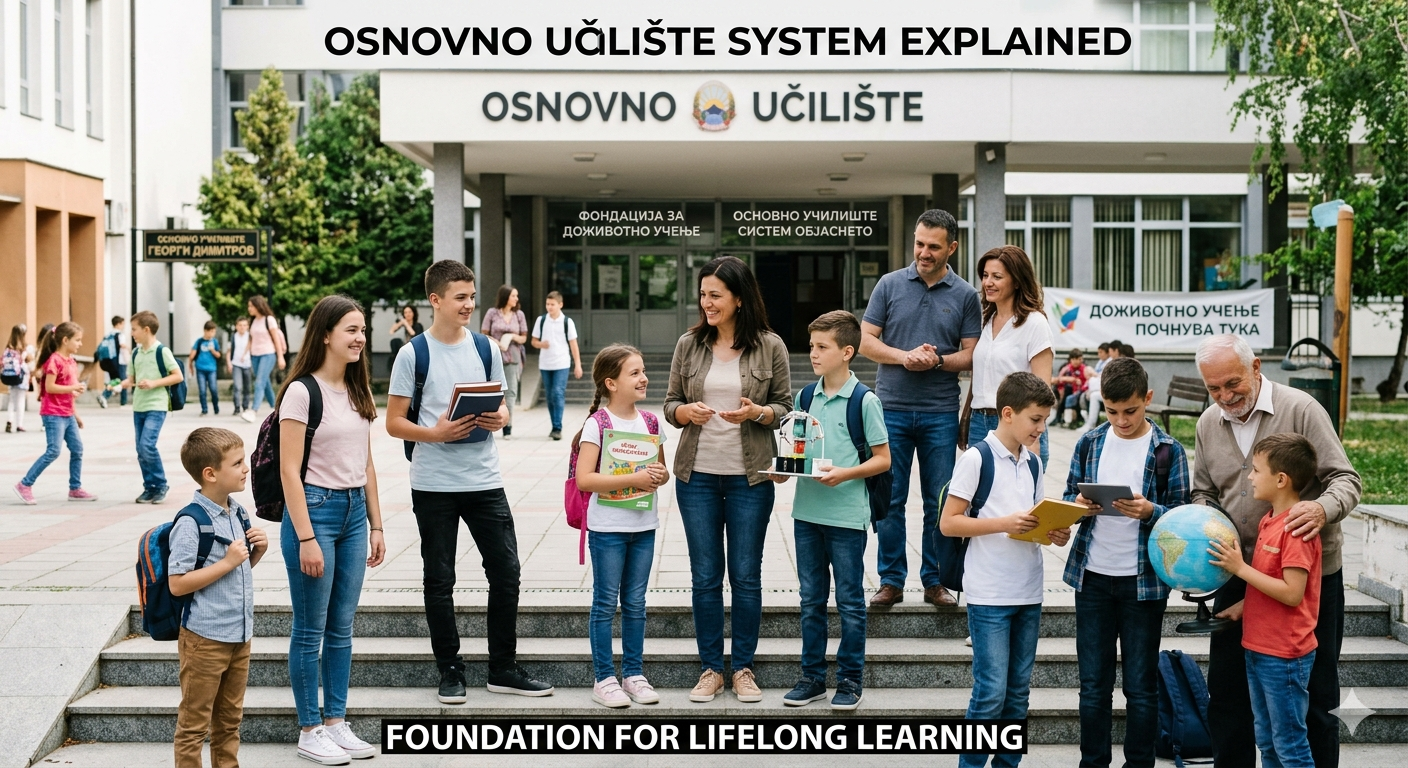
A country’s educational system is one of the most reliable indicators of its social priorities and its vision for the future. Croatia’s Osnovno Uciliste system — the compulsory eight-year primary and lower secondary education framework — reflects a strong national commitment to universal, high-quality education for every child. Far more than a simple schooling requirement, the Osnovno Uciliste system is the carefully engineered foundation on which Croatian society builds its human capital, civic culture, and economic potential.
Table of Contents
The Architecture of the Osnovno Uciliste System
The Osnovno Uciliste system spans eight academic years, divided into two clearly defined cycles. The first cycle covers grades one through four, where students are typically assigned a single class teacher who provides consistency and nurturing guidance during the most formative years of a child’s education. The second cycle spans grades five through eight, transitioning to subject-specific teaching as students develop greater academic maturity and prepare for secondary school specialization.
As documented by the OECD Education at a Glance reports, Croatia’s participation rates in compulsory education are consistently high, reflecting both the legal requirement and genuine social acceptance of the importance of primary schooling. Attendance is mandatory by law, and the state funds the entire program, ensuring no financial barrier prevents any child from receiving their full eight years of education.
The National Curriculum and Recent Reforms
The national curriculum within the Osnovno Uciliste system is set by Croatia’s Ministry of Science and Education and reviewed periodically to keep pace with educational research and labor market demands. Core subjects include Croatian language and literature, mathematics, natural sciences, social studies, history, geography, foreign languages beginning as early as first grade, physical education, art, and music.
A landmark curriculum reform initiated in recent years introduced significant modernization, embedding digital literacy across all grade levels, updating science content to reflect current knowledge, and introducing project-based learning methodologies. These changes represent Croatia’s recognition that twenty-first century education must go beyond content delivery and focus on critical thinking, creativity, collaboration, and digital fluency.
Assessment Philosophy and Student Support
Assessment within the Osnovno Uciliste system uses a five-point numerical scale, with five representing excellent achievement. Students are evaluated through written examinations, oral assessments, project work, and ongoing classroom participation. At the end of each semester, formal progress reports are issued and shared with families.
The system places increasing emphasis on inclusive education. Students with special educational needs are integrated into mainstream Osnovno Uciliste classrooms wherever appropriate, supported by individualized educational plans and specialist staff. Remedial support programs are available for students who need additional help, reflecting a commitment to leaving no child academically behind.
Preparing Students for Secondary Education and Beyond
Completion of the eight-year Osnovno Uciliste program opens the door to several distinct secondary education pathways. Students who demonstrate strong academic performance typically pursue grammar school education leading to the Matura examination and university entry. Others choose vocational or technical secondary schools aligned with their career interests, while artistically talented students may attend specialist arts schools.
The guidance counseling available within Osnovno Uciliste schools plays a crucial role in helping students and families navigate this transition. Counselors provide information about available schools, admissions requirements, and career pathways, helping ensure that each student’s secondary school choice genuinely matches their strengths and aspirations.
Frequently Asked Questions (FAQs)
Q1: How long does the Osnovno Uciliste system last?
The Osnovno Uciliste system lasts eight years, from approximately age six or seven through age fourteen. It covers both primary and lower secondary education and is the compulsory schooling requirement for all children in Croatia.
Q2: What grading scale is used in Croatian primary schools?
Croatian Osnovno Uciliste schools use a numerical scale from one to five. Five represents excellent performance, four is very good, three is good, two is sufficient, and one indicates insufficient or failing performance across a subject.
Q3: Has the Osnovno Uciliste curriculum been updated recently?
Yes. Croatia has undertaken significant curriculum reform in recent years, integrating digital literacy, updated science content, project-based learning approaches, and civic education into the national curriculum. These reforms aim to better prepare students for the demands of modern education and employment.
Q4: What support is available for students who struggle academically?
Students facing academic difficulties in the Osnovno Uciliste system can access remedial support programs, individualized attention from teachers, and, where needed, individualized educational plans developed by specialist educators. The system is designed to identify and support struggling learners as early as possible.