Food has always been one of the most reliable ways that human beings express care, celebrate relationships, and mark important moments. Across cultures and centuries, the act of inviting someone to share a meal carries weight that goes well beyond nutrition. In Swedish culture, the concept of bjudlunch captures this tradition of social dining in a particularly warm and deliberate way.
Bjudlunch, which translates directly from Swedish as invitation lunch or hosted lunch, refers to the practice of hosting a sit-down midday meal for guests, typically in a home or a traditional restaurant setting, as a gesture of hospitality, celebration, or professional courtesy.
Table of Contents
What Is Bjudlunch?
At its core, bjudlunch is an invitation to share a lunch meal at someone else’s expense and in a setting chosen by the host. The word bjuda in Swedish means to invite or to treat, and lunch is of course the midday meal. Together they describe a hosted lunch, one where the guest is welcomed, fed, and made to feel valued.
While the word itself is straightforward, the practice it describes carries layers of social meaning. A bjudlunch is not simply a meal. It is a gesture of welcome, a statement of value toward the guest, and an opportunity for the kind of unhurried conversation that a shared meal naturally encourages. In Swedish culture, which places a high value on sincerity and meaningful social connection, the bjudlunch is taken seriously as a social form.
The History and Cultural Roots of Bjudlunch
Swedish Dining Traditions
Swedish food culture has historically centered on meals as social events. From the elaborate smorgasbord tradition to the everyday ritual of fika, the Swedish coffee and pastry break that punctuates the workday, there is a consistent cultural emphasis on taking time to eat and drink together as a way of building and maintaining relationships.
The bjudlunch sits within this broader tradition of socially meaningful meals. Historically, a hosted lunch in Sweden would often involve multiple courses, traditional dishes, and the kind of table setting that communicated respect for the guest.
Bjudlunch in Professional Life
In Swedish professional culture, the bjudlunch has long served as a way of conducting business in a relaxed and human setting. Colleagues, clients, and partners are invited to lunch as a way of building trust, discussing business away from the formality of the office, and demonstrating the kind of personal investment in the relationship that a formal meeting room cannot easily convey.
What a Traditional Bjudlunch Involves?
The Setting
A bjudlunch can take place in a home or a restaurant. Home bjudlunches carry a more intimate and personal quality, while restaurant bjudlunches offer a more neutral setting that can work well in professional contexts. In either case, the host takes responsibility for the choice of venue, the ordering or preparation of food, and the payment.
The Food
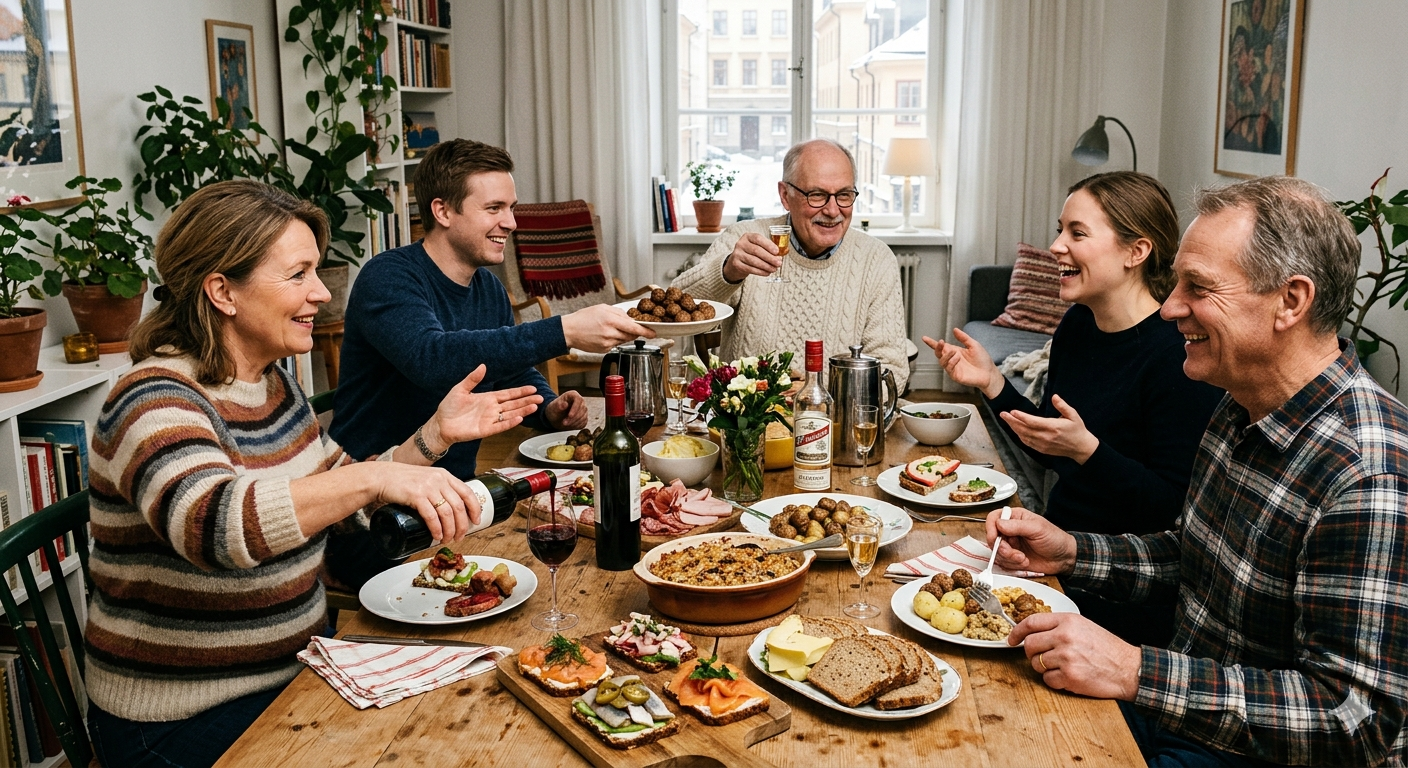
Traditional Swedish bjudlunch menus often draw on the country’s classic culinary repertoire:
- Husmanskost, the hearty everyday Swedish cooking that includes dishes like meatballs, Jansson’s temptation, and various fish preparations
- Freshly baked bread accompanied by butter or Swedish dairy spreads
- Seasonal vegetables and salads reflecting the Nordic emphasis on fresh, local ingredients
- A light dessert, often featuring berries or traditional Swedish baked goods
- Coffee or tea served after the meal, continuing the conversation in a relaxed atmosphere
The Atmosphere
What distinguishes a genuine bjudlunch from simply sharing a meal is the quality of attention the host brings to the experience. Guests are made comfortable, conversation is prioritized, and the meal is allowed to unfold at its own pace rather than being rushed. In Swedish culture, eating together without checking phones or watching the clock is itself a form of respect.
Bjudlunch in Modern Swedish Life
Contemporary Swedish society has changed significantly from the era in which bjudlunch emerged as a defined cultural practice, but the tradition persists in adapted forms. The formality has largely softened. A modern bjudlunch might be a casual home-cooked meal between close friends as easily as it might be a multi-course lunch at a traditional Swedish restaurant.
For those interested in exploring Swedish food culture more broadly, including the traditions that inform practices like bjudlunch, Visit Sweden offers comprehensive resources on Swedish culinary heritage, regional food traditions, and the cultural values embedded in Swedish dining customs.
How to Host a Bjudlunch
Plan with Your Guest in Mind
A thoughtful bjudlunch begins with consideration of the guest. What do they enjoy eating? Are there dietary restrictions to accommodate? What kind of atmosphere would make them most comfortable? These questions signal that the invitation is genuine and that the host has invested thought in the experience rather than simply going through a social motion.
Choose the Right Setting
The setting should match the nature of the relationship and the purpose of the gathering. A close friend might appreciate the intimacy of a home meal. A business colleague might feel more comfortable in a pleasant restaurant with neutral ground. The choice itself communicates something about how the host reads the relationship.
Give the Meal Its Own Time
A bjudlunch that feels rushed defeats its own purpose. The gift being offered is not just food but time and attention. Protect the lunch from interruptions, set aside enough time for genuine conversation, and resist the urge to fill every silence with an agenda.
Frequently Asked Questions About Bjudlunch
What does bjudlunch mean in English
Bjudlunch translates from Swedish as invitation lunch or hosted lunch. It refers to the practice of hosting a guest for a midday meal at the host’s expense, as a gesture of hospitality, social connection, or professional courtesy.
Is bjudlunch a formal occasion
It can be formal or informal depending on the context and the relationship between host and guest. Traditional bjudlunches were often quite formal, but contemporary versions range from casual home cooking to formal restaurant settings.
Is bjudlunch only practiced in Sweden
The specific term and its cultural framing are Swedish, but the underlying practice of hosting guests for a midday meal as a gesture of social importance exists across many cultures. The Swedish bjudlunch simply gives this universal human practice a specific name and cultural character.
Can bjudlunch happen in a professional context
Yes, and it is quite common. In Swedish business culture, hosting a client, partner, or colleague for bjudlunch is an established way of building trust and demonstrating that the professional relationship is valued on a personal level as well.