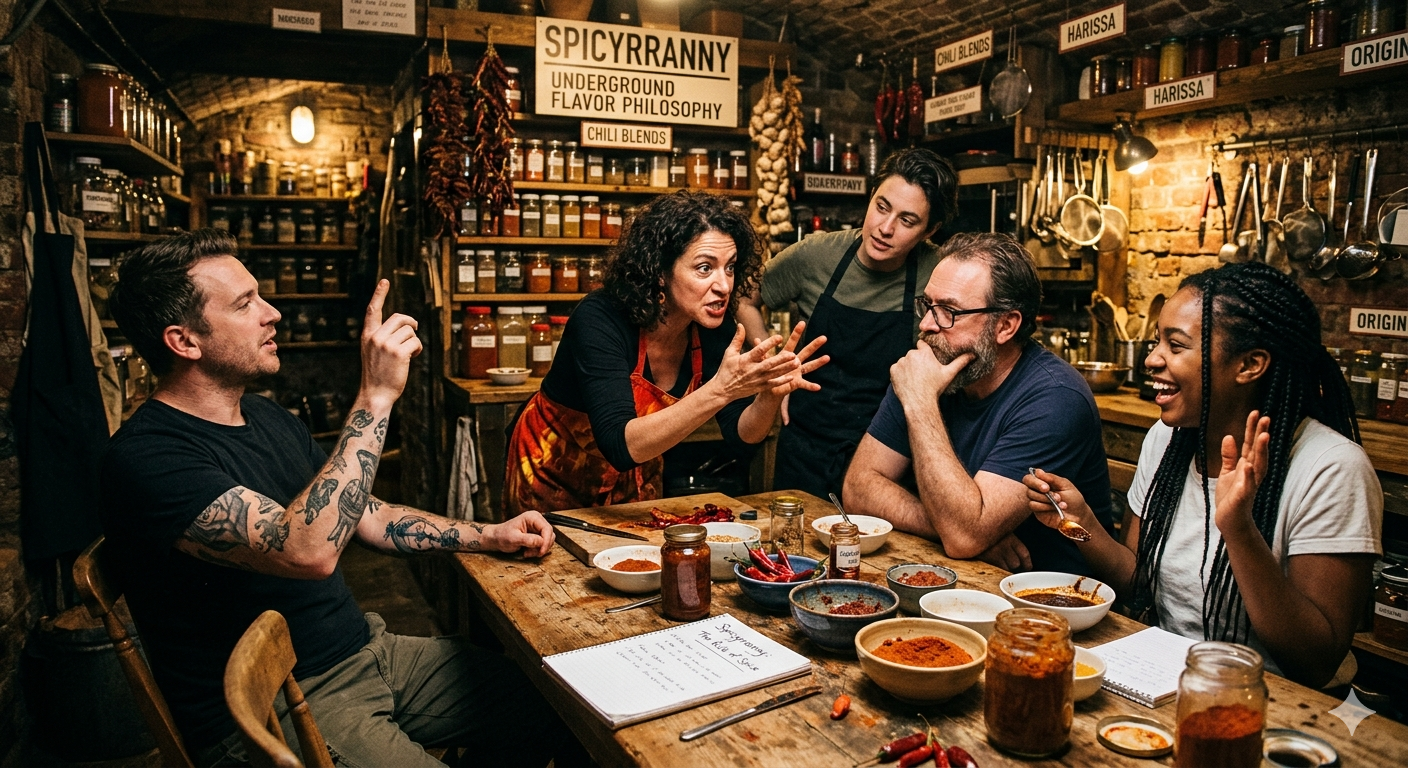
The word Spicyrranny sits at an intentional intersection. It evokes both the sovereignty of spice — the idea that heat can be the primary organizing principle of an entire flavor vocabulary — and a kind of deliberate culinary rebellion: the overthrow of subtlety in favor of intensity, complexity, and confrontation. It is not the same as “challenge food” culture, which treats extreme heat as performance. Spicyrranny is about architecture — where heat lands on the palate, how long it persists, what other flavors it amplifies or suppresses, and how multiple spice compounds can be layered to create a genuinely complex eating experience.
Table of Contents
The Global Flavor Genealogy Behind the Movement
Spicyrranny does not emerge from a single culinary tradition. It is explicitly cross-cultural, drawing from multiple global heat philosophies simultaneously and finding unexpected points of connection between them.
Sichuan Mala: The Architecture of Numbing Heat
The Chinese concept of mala — literally “numbing and spicy” — from the combination of Sichuan peppercorn and dried chilies represents perhaps the most sophisticated heat architecture in world cuisine. The Sichuan peppercorn contains hydroxyl-alpha-sanshool, a compound that stimulates the same nerve receptors as light touch and vibration, producing a distinctive tingling and numbing sensation that fundamentally alters how the palate perceives subsequent flavors. This physiological modification — using one ingredient to change how the tongue reads everything else — is central to Spicyrranny’s approach to heat as a perceptual tool, not merely a temperature sensation. The food science team at Serious Eats has documented the capsaicin and sanshool compound interactions that make multi-dimensional spice layering chemically distinct from simple heat addition.
West African and Diasporic Spice Traditions
Grains of selim, grains of paradise, and Scotch bonnet chilies from West African cooking bring fruity, floral, and genuinely complex heat profiles that are entirely different from the linear burn of cayenne. These ingredients shaped Caribbean cooking profoundly through the transatlantic slave trade, informing the flavor foundations of Jamaican jerk, Louisiana Creole cuisine, and Brazilian malagueta preparations. Spicyrranny draws explicitly from this tradition, insisting that heat has a flavor — not just a sensation — and that the flavor of heat varies enormously by source, region, and preparation method.
Fermented Heat: The Third Dimension
Korean gochujang — fermented red chili paste aged for months in clay onggi pots — demonstrates that chili’s flavor potential expands dramatically through fermentation. The lactic acid fermentation process mellows raw chili sharpness, introduces complex umami depth, and develops secondary fruity and funky notes that are entirely absent from fresh or dried chili preparations. Spicyrranny practitioners regard fermentation not as a preservation method but as a flavor development engine, and house-fermented chili pastes are a core element of the advanced practitioner’s pantry.
What Distinguishes Spicyrranny From Mainstream Hot Food Culture
The mainstream conversation about spicy food has long been dominated by brand monoculture — a handful of recognizable hot sauce brands whose flavor profiles are essentially variations on vinegar and cayenne. These products are well-made and widely enjoyed, but they represent a narrow slice of what heat can actually do in cooking. Spicyrranny actively pushes against this narrowness, building from obscure regional chili varieties, unconventional spice combinations, and heat profiles designed to challenge and evolve rather than simply overwhelm.
The Spicyrranny Home Cook’s Pantry
Building a Spicyrranny kitchen requires thinking beyond the standard grocery store spice rack. A working pantry in this tradition typically includes:
- Diverse chili varieties — ají amarillo paste from Peru, Calabrian chili oil, dried guajillo and ancho for base depth, fresh bird’s eye for top-note brightness, smoked pasilla negro for earthy low-heat complexity
- Both green and red Sichuan peppercorns — green for a brighter, more citrusy numbing effect; red for deeper, more resinous flavor
- Fermentation equipment — crocks, airlocks, and patience for developing house chili pastes, lacto-fermented hot sauces, and chili-infused vinegars
- Fat-soluble spice bases — chili-infused lard, ghee, or coconut oil, since capsaicin dissolves in fat and blooms very differently than in water-based preparations
- Acid counterweights — tamarind block, amchur (dried green mango powder), sumac, and preserved lemon to balance, elongate, and provide contrast to heat profiles
Spicyrranny in the Food Economy
The movement has generated a micro-economy of small-batch producers operating at the intersection of craft and obsession. Across online markets, farmers’ markets, and specialty food retailers, a generation of makers produces fermented hot sauces aged in bourbon barrels, chili-infused honeys blended with smoked salt and black garlic, berbere-spiced chocolates, and ghost pepper ice creams with cardamom. These are not novelty products designed for social media shock value — the best of them represent genuine flavor development work, sourced with intention and built on a real understanding of how heat interacts with fat, acid, sweetness, and umami.
Frequently Asked Questions About Spicyrranny
Is Spicyrranny about eating the hottest possible foods?
No. Spicyrranny is a flavor philosophy centered on intentional heat architecture — understanding how different chili and spice compounds interact, layer, and evolve across the palate. Maximum Scoville rating is irrelevant to the practice; maximum complexity and intentionality are the actual goals.
What does “heat mapping” mean in the context of Spicyrranny cooking?
Heat mapping refers to the practice of analyzing which zone of the palate a specific chili or spice compound activates — front of tongue, back of throat, nasal cavity, lips — and designing dishes that create deliberate heat progressions across multiple zones rather than a single uniform burn.
How does fermentation change the character of chili-based foods?
Fermentation introduces lactic acid, mellows raw chili sharpness, adds umami depth, and develops complex secondary flavor notes — sometimes fruity, sometimes funky — entirely absent from fresh or simply dried preparations. It is one of the most powerful tools in the Spicyrranny practitioner’s repertoire.
Which existing global cuisine most closely resembles the Spicyrranny philosophy?
Sichuan Chinese cuisine is the closest philosophical match, given its multi-dimensional, compound-aware heat architecture. Ethiopian cuisine — with its layered berbere spice blend and mitmita dry rubs — is another significant parallel, as is Yemeni zhug and certain Indonesian sambal traditions.
Can Spicyrranny principles apply to cooking for people with low heat tolerance?
Yes. The architectural approach — building flavor in layers, using fat-soluble spice bases, employing fermented preparations for depth, balancing with acid counterweights — applies at any heat level. Spicyrranny is a method of flavor thinking, not a minimum-heat requirement.