Language is a living thing, and the way different cultures adopt, adapt, and linguistically shape a common concept tells us a great deal about identity and culinary habit. In Romanian, the word toastul — with the definite article attached, meaning ‘the toast’ — is a fascinating example of how a simple English culinary term has been absorbed into another language and given a life of its own. It also reflects the broader Eastern European relationship with bread culture, celebratory toasts, and food traditions that stretch back centuries.
Table of Contents
What Does Toastul Mean?
In Romanian, toastul is the definite form of the noun toast — a word borrowed directly from English. Romanian, like many European languages, has absorbed English loanwords into its vocabulary, particularly in areas related to food, technology, and popular culture. When a Romanian speaker says toastul, they are referring specifically to ‘the toast’ — the slice of toasted bread, the celebratory drink dedication, or in some informal contexts, the entire cultural ritual associated with it.
The word follows standard Romanian grammatical rules for masculine nouns ending in consonants, where the definite article -ul is appended to create the definite form. So: toast means ‘a toast’ or ‘some toast’, while toastul means ‘the toast’. This linguistic borrowing is not unusual. Romanian has absorbed words from French, Turkish, Italian, German, and increasingly English, particularly after 1989 when Romania opened to Western cultural influence.
The Cultural Weight of Toast in Romanian Life
Bread as a Sacred Symbol
To understand toastul in Romanian culture, you must first understand the symbolic weight that bread carries in Eastern European tradition. In Romania, bread is not simply food — it is a marker of hospitality, prosperity, and respect. The ancient tradition of welcoming guests with paine si sare (bread and salt) reflects a deep cultural reverence for bread that predates the modern nation-state.
When toasted bread — toastul — enters this cultural framework, it inherits some of this symbolic gravity. Preparing and offering toast to a guest is a gesture of care. Sharing toast at a family breakfast is a ritual of togetherness. The act is small but loaded with cultural meaning.
Celebratory Toasts in Romanian Tradition
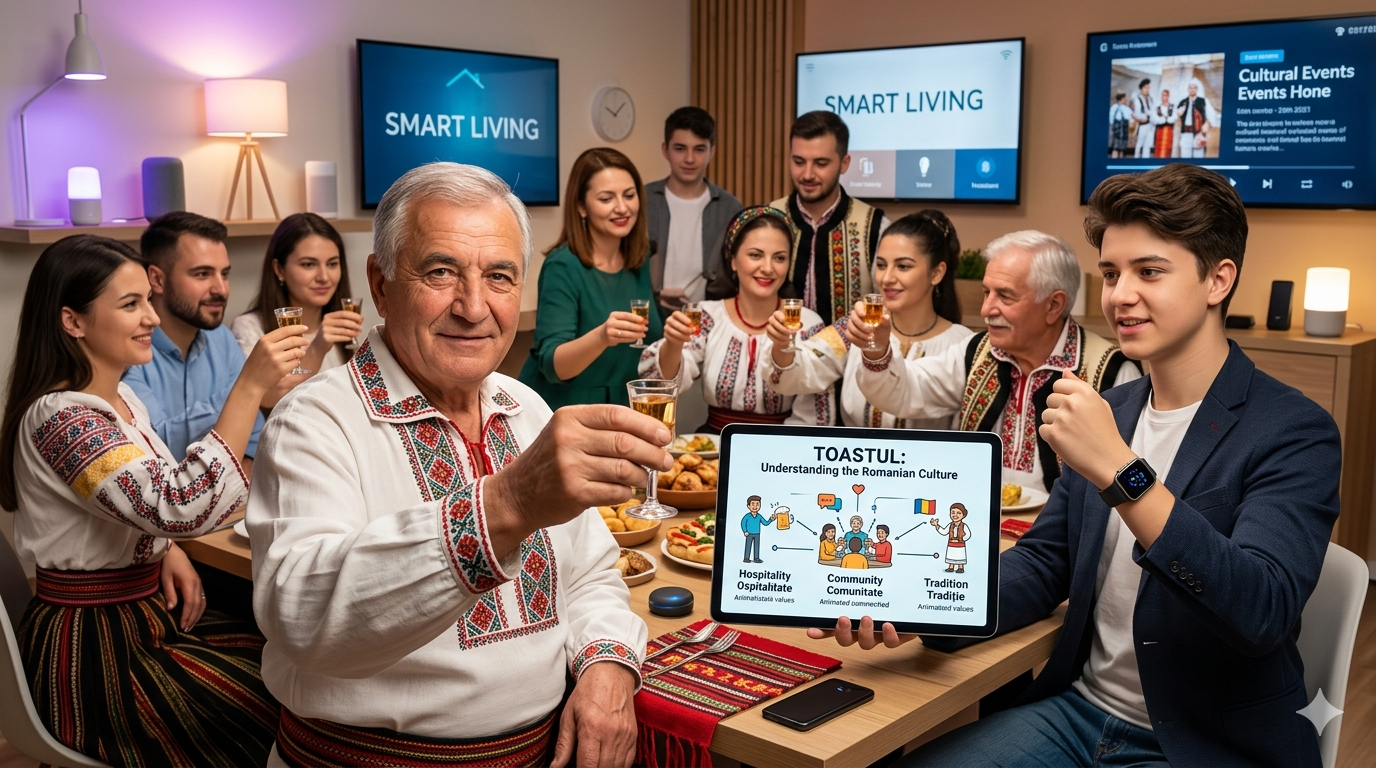
The word toastul also carries the meaning of a spoken or raised-glass toast — the verbal dedication of a drink to someone’s health, happiness, or achievement. In Romanian social life, this practice is central to celebrations, weddings, and gatherings. The Romanian word un toast (a toast) in this sense is used synonymously with urare (a wish) and typically precedes the communal raising of glasses.
Romanian toasts are often elaborate, poetic, and emotionally resonant. At weddings, the nasi (godparents) traditionally deliver extended toasts combining humour, wisdom, and heartfelt wishes. The phrase Sa traiti! (May you live well!) or Noroc! (Luck/Cheers!) typically punctuates these moments.
For insight into how Romanians celebrate and the cultural significance of food in their social rituals, the UNESCO Intangible Cultural Heritage database documents related food traditions from across Eastern Europe, offering valuable ethnographic context.
Toastul in Romanian Cuisine and Daily Life
The Romanian Breakfast Table
Romanian breakfasts have traditionally featured bread, cheese, cold cuts, eggs, and spreads rather than the British model of hot cooked items. However, toasted bread — toastul — has become increasingly common in urban Romanian households over the past two decades, accelerated by the widespread availability of electric toasters and the influence of Western food culture.
In city cafes across Bucharest, Cluj-Napoca, and Timisoara, artisan toasted bread with various toppings has become a staple of the modern breakfast and brunch scene. Avocado toast, sourdough toast with eggs, and sweet toast with fruit spreads have all found enthusiastic audiences among younger Romanian consumers.
Traditional Romanian Bread Varieties Used for Toasting
When Romanians make toastul at home, they often use distinct bread varieties that reflect local baking traditions. Paine de casa — homemade bread with a dense crumb — toasts beautifully and develops a rich, nutty flavour. Cozonac — a sweet enriched bread traditionally made for Easter and Christmas — when sliced and lightly toasted becomes an extraordinary breakfast treat with butter or jam. Franzela — a common slightly crusty white loaf found in every Romanian bakery — is the go-to bread for everyday toastul in Romanian households.
The Linguistic Journey: How Toast Became Toastul
Romanian’s Relationship with Borrowed Words
Romanian is a Romance language with significant Slavic, Turkish, Greek, and Germanic influences built up over centuries. Its grammatical system, however, has remained remarkably consistent, and when foreign words are borrowed, they are typically fitted into existing grammatical patterns. Toastul is a clean example of this. The base word toast is borrowed intact from English. The definite article -ul is then added according to Romanian grammar rules for masculine nouns.
This pattern repeats across dozens of borrowed culinary terms in Romanian: sandvisul (the sandwich), cornul (the croissant, adapted from French), cheeseburgherul (the cheeseburger). These words show how seamlessly the language absorbs and naturalises foreign vocabulary.
Code-Switching and Modern Romanian
Among younger urban Romanians, code-switching between Romanian and English is common in casual speech. Someone might say ‘am mancat toastul’ (I ate the toast) using the borrowed term naturally alongside traditional Romanian verbs. This linguistic blending is not seen as degrading the language but rather as evidence of Romanian’s flexibility and adaptability.
Recipes: Making the Perfect Toastul
Romanian-style toastul at home often involves simple, high-quality ingredients. For the classic Toastul cu Unt si Miere (Toast with Butter and Honey): slice dense homemade bread to about 1.5 cm thickness, toast on both sides until golden brown, spread generously with unsalted butter while hot, and drizzle with local Romanian honey — miere de tei (linden honey) is particularly prized.
For Toastul cu Branza si Rosii (Toast with Cheese and Tomatoes): toast a slice of franzela or wholegrain bread, layer with telemea (a Romanian brined sheep’s cheese similar to feta) or cas (fresh young cheese), top with sliced fresh tomatoes and a drizzle of sunflower oil, and season with salt and fresh herbs.
FAQs About Toastul
Q: What does toastul mean in Romanian? Toastul means ‘the toast’ in Romanian — it is the definite article form of the borrowed English word toast, following standard Romanian grammatical rules for masculine nouns.
Q: Is toast a traditional part of Romanian cuisine? Toasted bread has always existed in Romanian food culture, but the modern concept of toast as a standalone breakfast item became more prevalent after 1989 with increased Western cultural influence and access to electric kitchen appliances.
Q: What bread do Romanians typically use for toastul? Common choices include franzela (standard white loaf), paine de casa (dense homemade bread), and increasingly sourdough and artisan breads available in urban bakeries.
Q: How do Romanians give a celebratory toast? A spoken celebratory toast in Romania typically includes a heartfelt wish, often using phrases like Noroc! (Cheers/Luck) or Sa traiti! (May you live well). At formal events, extended poetic toasts are common.
Q: Is toastul a commonly used word in Romanian daily speech? Yes. While older generations might use paine prajita (fried/toasted bread), the borrowed word toast and its definite form toastul are widely understood and used, particularly in urban settings and among younger speakers.
Q: How is toastul pronounced in Romanian? It is pronounced approximately as tohst-ul, with the stress on the first syllable, closely mirroring the English pronunciation of ‘toast’ with the Romanian definite article -ul appended.
Toastul is a small word that opens up large conversations — about language borrowing, food culture, tradition, and the way Eastern European societies have navigated their relationship with Western cultural influence since 1989. Whether you encounter it as a piece of beautifully toasted paine de casa spread with linden honey, or as a poetic spoken dedication raised at a Romanian wedding table, toastul carries more meaning than its simple letters suggest. It is, in its own quiet way, a window into Romanian life.