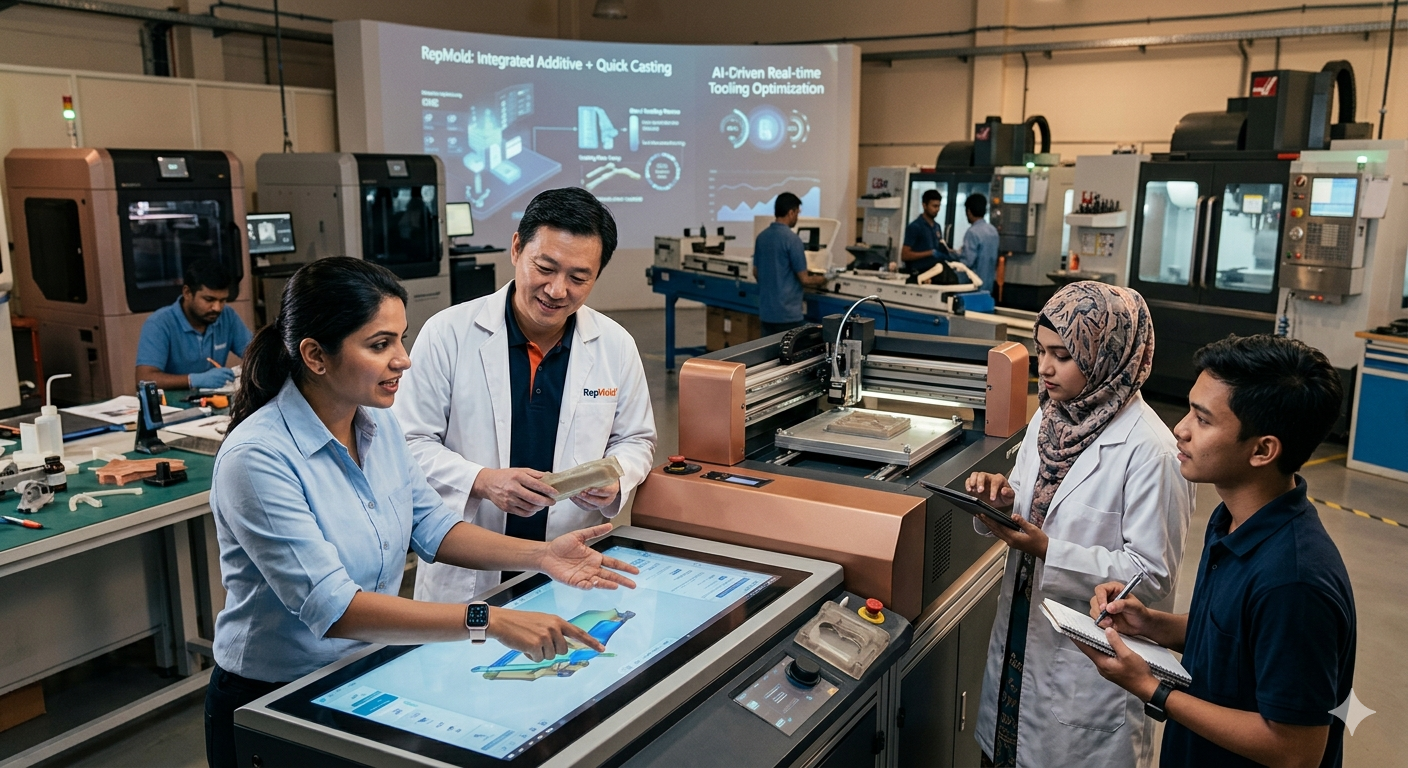
The world of manufacturing is undergoing a powerful transformation. As product cycles shrink and consumer demands become increasingly specific, the need for faster, smarter, and more sustainable production methods has never been greater. Enter RepMold — a next-generation approach to mold-making and rapid tooling that is reshaping how industries design, test, and produce physical components.
Whether you are a startup founder seeking agility or a global manufacturer striving for efficiency, understanding RepMold is essential to staying competitive in the modern industrial landscape.
Table of Contents
What is RepMold?
RepMold is derived from two core words: “replication” and “molding.” At its essence, it refers to an advanced manufacturing methodology that emphasizes precision, repeatability, and scalability. Unlike traditional molding — which often involves long tooling cycles, high labor costs, and significant material waste — RepMold integrates digital design tools, AI-assisted simulation, CNC machining, and 3D printing into a cohesive, streamlined workflow.
The Core Technology Behind RepMold
The backbone of RepMold rests on several interconnected technologies. Digital Design and CAD Simulation allows engineers to begin with detailed 3D models, using computer-aided design tools to test mold flow, stress distribution, and thermal behavior before any physical material is cut or shaped. This virtual validation eliminates costly errors early in the process.
CNC Machining and 3D Printing: RepMold leverages both subtractive and additive manufacturing. CNC machining delivers high-tolerance precision, while 3D-printed inserts accommodate complex geometries that traditional tools struggle with.
AI and Machine Learning: Intelligent algorithms continuously monitor production parameters — temperature, pressure, humidity, and cycle times — adjusting the process in real time to maintain quality and prevent defects.
Smart Material Selection: RepMold systems often use aluminum alloys and specialized composites instead of hardened steel, reducing both lead times and setup costs without compromising part quality.
Why RepMold Matters in Modern Industry?
Traditional mold-making has long been viewed as a bottleneck in product development. Creating a hardened steel mold from scratch can take weeks or even months, making it difficult for companies to respond quickly to market feedback. RepMold fundamentally changes this dynamic.
Speed and Agility
With RepMold, what previously required weeks can now be accomplished in days. A consumer electronics company, for instance, can test ten design variations digitally, create a rapid prototype mold, gather real-world feedback, and refine the product — all within a single development sprint. This agility mirrors the iterative methodology of software development, bringing the concept of “release early, release often” into the physical manufacturing world.
Cost Efficiency
By automating multiple steps and reducing manual labor requirements, RepMold dramatically lowers operational costs. Material waste is minimized through digital precision, and the ability to start with lower-cost aluminum molds before investing in hardened steel allows businesses to align tooling expenses with validated milestones. Startups benefit from affordable entry points, while large enterprises benefit from reduced risk in limited-edition or experimental product lines.
RepMold Across Industries
One of RepMold’s greatest strengths is its versatility. It serves a remarkable range of sectors:
Automotive
Automotive manufacturers use RepMold to rapidly prototype dashboards, engine components, and interior fittings. When design changes are needed — whether for ergonomic improvements or regulatory compliance — RepMold enables swift iteration without committing to expensive permanent tooling.
Medical Devices
In healthcare, where precision and consistency are non-negotiable, RepMold delivers patient-specific implants, surgical tools, and device casings with micron-level accuracy. The ability to quickly produce customized components supports personalized medicine and accelerates time-to-regulatory-submission for new devices.
Aerospace
Aerospace applications demand lightweight components with consistent structural integrity. RepMold’s combination of advanced simulation and precise machining ensures that every replicated part meets strict safety and performance standards.
Consumer Electronics
For electronics manufacturers operating in fast-moving markets, RepMold’s rapid iteration capabilities are invaluable. Companies can quickly adjust product casings, connectors, and housings based on consumer feedback, staying responsive in a highly competitive landscape.
RepMold and Industry 4.0
RepMold is not just a manufacturing tool — it is a cornerstone of the Industry 4.0 paradigm. It integrates seamlessly with the Internet of Things (IoT), cloud computing, and AI-driven analytics to create what many call a “smart factory.” Sensors embedded throughout RepMold systems collect real-time data, feeding it into machine learning models that continuously optimize the production process.
According to the World Economic Forum’s insights on advanced manufacturing, the convergence of digital design, automation, and intelligent data processing is defining the next era of global production. RepMold sits squarely at this intersection, enabling manufacturers to harness these forces in a practical, scalable way.
Challenges and Considerations
Despite its impressive capabilities, RepMold is not without challenges. The initial investment in digital systems, automation tools, and skilled labor can be significant — particularly for small manufacturers. Data security is also a concern, as RepMold systems rely heavily on digital design files and cloud-connected platforms.
The Future of RepMold
Looking ahead, RepMold is poised to intersect with emerging technologies in exciting ways. AI-driven design optimization will enable software to predict the optimal mold configuration autonomously. Additive manufacturing will allow for increasingly complex geometries. Blockchain could be used to verify component authenticity across global supply chains.
Frequently Asked Questions (FAQs)
Q1: What does RepMold stand for?
RepMold is a combination of “replication” and “molding,” representing a manufacturing methodology focused on rapid, precise, and repeatable mold creation using digital and AI-assisted tools.
Q2: Is RepMold suitable for small businesses?
Yes. While the initial investment can be significant, RepMold offers scalable entry points. Small businesses can begin with limited pilot projects and expand as they validate demand and build expertise.
Q3: How does RepMold compare to traditional injection molding?
Traditional injection molding is slower, more expensive to set up, and less flexible for design changes. RepMold reduces lead times significantly, lowers setup costs, and allows for rapid design iteration — making it ideal for dynamic, fast-moving product environments.
Q4: What industries benefit most from RepMold?
Automotive, medical devices, aerospace, consumer electronics, and consumer goods sectors all benefit substantially. Any industry requiring precision parts with the need for rapid design iteration is a strong candidate.
Q5: Is RepMold environmentally friendly?
RepMold promotes green manufacturing by minimizing waste, optimizing material use, and supporting eco-friendly materials. Its alignment with ESG standards makes it a sustainable alternative to traditional molding processes.
Q6: What skills are needed to operate RepMold systems?
Operators benefit from knowledge of CAD software, digital simulation tools, CNC machining, and data analytics. Training resources are growing as adoption expands across the industry.