Community health centers, formally designated as Federally Qualified Health Centers (FQHCs) under the Health Resources and Services Administration (HRSA), are nonprofit, community-owned primary care organizations operating under a federal mandate to serve patients regardless of their ability to pay. They charge on a sliding-fee scale tied to household income and family size relative to the federal poverty level — meaning a patient can legally receive a primary care visit for as little as zero dollars, not as charity but as policy.
This structure was established under the Economic Opportunity Act of 1964 as part of President Lyndon Johnson’s War on Poverty, with the first two pilot health centers opening in Boston’s Columbia Point housing project and Mound Bayou, Mississippi — a rural Black community with essentially no prior access to medical care. The program was later codified and expanded under Section 330 of the Public Health Service Act, which remains its governing statute.
Table of Contents
The Demographics That Define the System’s Mission
The populations served by community health centers are not marginal in terms of their importance to the functioning of the American economy — they are central to it, while remaining largely invisible in healthcare policy conversations. Approximately 63 percent of FQHC patients live below the federal poverty level. Nearly one in five is uninsured entirely. Roughly 62 percent identify as racial or ethnic minorities. A significant proportion are agricultural workers, domestic workers, food service employees, construction laborers, and other low-wage essential workers who are structurally excluded from employer-sponsored insurance and cannot afford individual market coverage even with ACA subsidies.
What FQHCs Are Actually Required to Provide
One of the most persistent misconceptions about community health centers is that they are limited, low-quality walk-in clinics for the poor. Federal statute requires something far more comprehensive. To maintain FQHC status and access federal Section 330 grants, a health center must provide:
- Comprehensive primary medical care including chronic disease management, preventive care, and pediatrics
- Dental care and oral health services
- Mental health and behavioral health services
- Substance use disorder treatment
- Pharmacy services with 340B Drug Pricing Program access
- Translation and interpretation services for patients with limited English proficiency
- Case management and enabling services that address non-clinical barriers to care such as transportation and housing instability
- After-hours coverage and 24/7 patient access arrangements
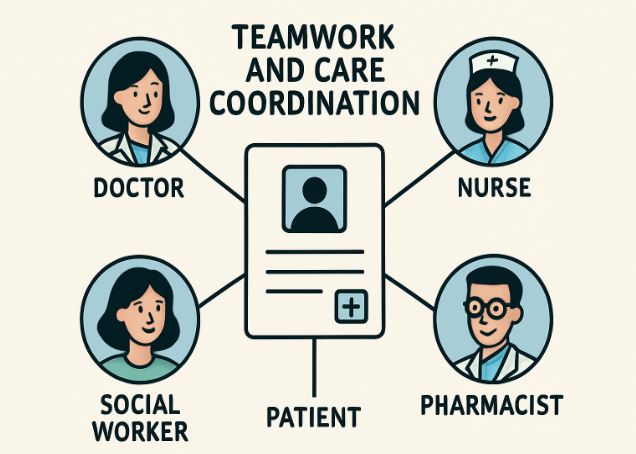
This breadth distinguishes FQHCs categorically from urgent care centers, free clinics, and hospital emergency departments. They are designed to be a patient’s continuous primary medical home — the place responsible for coordinating their entire care experience — not a last resort for acute problems.
The Patient-Majority Governance Requirement: A Radical Democratic Structure
Among the most distinctive and consistently underappreciated features of the FQHC model is its governance mandate. Federal law requires that a majority of each health center’s board of directors must be patients who are currently receiving care at that specific health center. This is not a recommendation or a best practice — it is a condition of federal funding, enforced through compliance reviews.
The 340B Program: Critical Lifeline Under Threat
The 340B Drug Pricing Program allows FQHCs and other covered entities to purchase outpatient medications at significantly reduced prices — discounts that can range from 25 to 50 percent below market rates. This is not a government subsidy; it is a statutory obligation placed on pharmaceutical manufacturers as a condition of having their drugs reimbursed by Medicaid and Medicare. The program’s economic logic is that manufacturers who benefit from public insurance programs should bear some of the cost of serving the populations those programs are designed to protect. According to the National Association of Community Health Centers (NACHC), this system now serves over 30 million patients annually across more than 14,000 service delivery sites — making it one of the largest primary care systems in the United States by patient volume.
Persistent Structural Pressures on a System That Works
Despite strong performance outcomes, community health centers face serious structural vulnerabilities. Primary care workforce shortages hit FQHCs particularly hard — they cannot compete on salary with hospital systems or private practices for physicians, nurse practitioners, and dentists, creating chronic vacancies especially in rural and frontier areas. Federal grant funding, while essential, is appropriated annually and subject to political disruption. The Medically Underserved Area (MUA) designation system that governs access to certain federal workforce programs has not been comprehensively updated in decades, leaving genuinely underserved communities without the formal designation needed to access resources they clearly need.
Frequently Asked Questions About Community Health Centers
Do I need to be uninsured or low-income to use a community health center?
No. Community health centers accept Medicare, Medicaid, CHIP, and most private insurance plans. Uninsured and underinsured patients are seen on a sliding-fee scale based on income, but insured patients of any income level are equally welcome and receive the same standard of care.
How are community health centers different from free clinics or urgent care centers?
Free clinics are typically volunteer-run charity operations with limited services. Urgent care centers are episodic and do not provide ongoing care coordination. FQHCs are federally funded, comprehensively staffed professional medical organizations providing continuous primary care, behavioral health, dental, and pharmacy services with formal quality reporting requirements.
What is the 340B Drug Pricing Program and why does it matter for health centers?
The 340B program requires pharmaceutical manufacturers to sell outpatient drugs to covered entities including FQHCs at significantly discounted prices. Health centers use these savings to fund expanded services — extended hours, additional staff, transportation programs — that would otherwise be unaffordable given their patient population’s limited ability to pay.
Are community health centers only located in rural areas?
No. While rural access is a major focus, CHCs operate extensively in urban and suburban areas, serving high-density low-income neighborhoods in cities including New York, Chicago, Los Angeles, Houston, and Miami. Many of the highest-volume FQHCs by patient count are urban organizations.
How does care quality at FQHCs compare to private healthcare providers?
Multiple independent studies show FQHCs perform comparably or better than private providers on key quality metrics including diabetes control, hypertension management, cancer screening rates, and prenatal care outcomes — despite serving patient populations with significantly higher rates of poverty, chronic illness, and social instability.