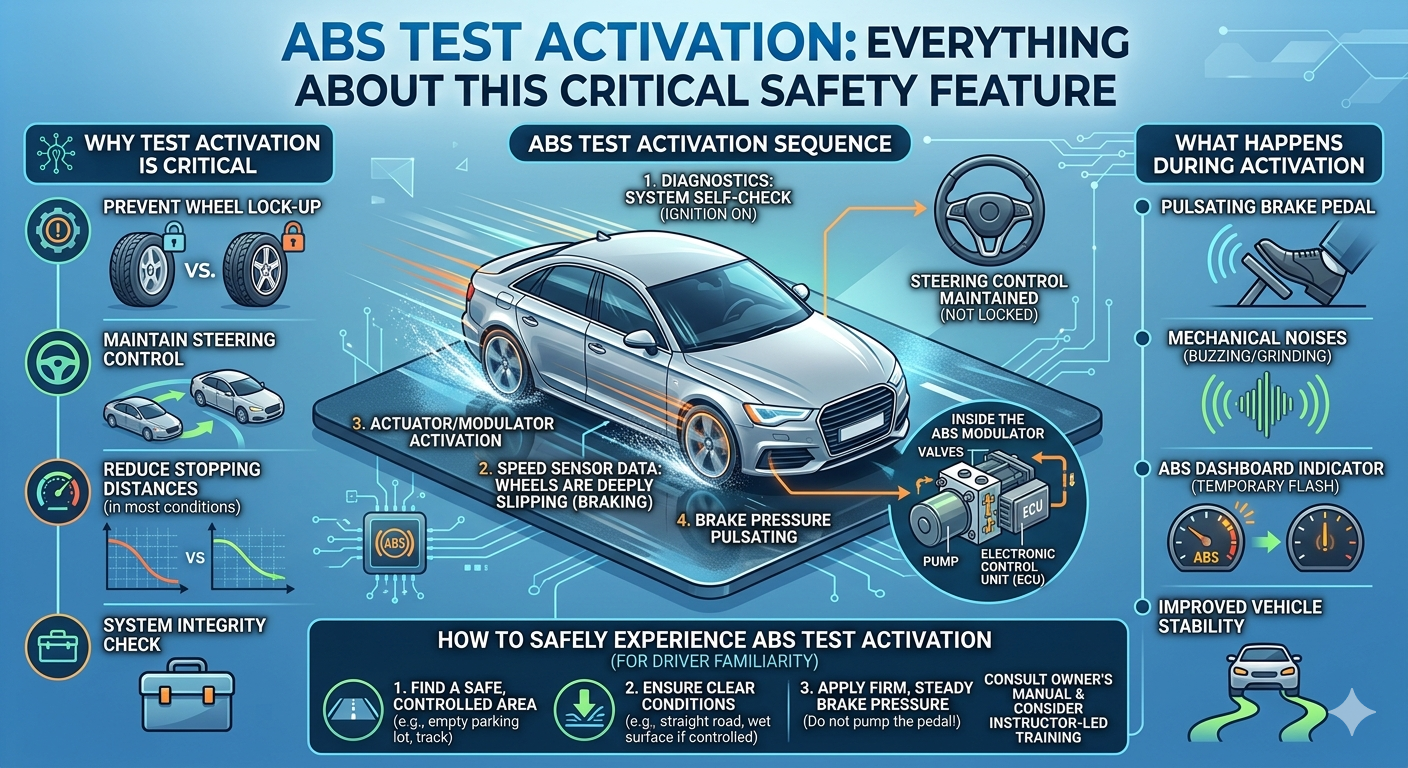
Modern vehicles are packed with safety systems that most drivers take for granted, and the Anti-lock Braking System, commonly known as ABS, ranks among the most important of them all. Since its widespread adoption, ABS has prevented countless accidents by keeping wheels from locking up during hard braking. But while many drivers know the term, surprisingly few understand what an ABS test activation actually is, what it feels like, and what it means when something goes wrong.
Whether you are a new driver or a seasoned road user, understanding your vehicle’s ABS and its self-test behavior is a straightforward way to stay safer on the road.
Table of Contents
What Is ABS and Why Does It Matter?
ABS stands for Anti-lock Braking System. It is an electronic braking aid that prevents a vehicle’s wheels from locking up when a driver applies the brakes hard. When wheels lock, the vehicle loses its ability to steer and can skid uncontrollably. ABS detects when a wheel is about to stop rotating under heavy braking and automatically reduces and reapplies brake pressure to that wheel several times per second, keeping it spinning and the driver in control.
The system is made up of four main components:
- Wheel speed sensors positioned at each wheel to monitor rotation rates
- An electronic control unit that processes sensor data in real time
- Hydraulic valves that modulate brake pressure to individual wheels
- A hydraulic pump that restores brake pressure after it is released
ABS Test Activation vs ABS Engagement in Emergency Braking
It is worth drawing a clear distinction between an ABS test activation and the system actually engaging during an emergency stop. These are two different events that can feel somewhat similar to an inexperienced driver.
Situations that trigger real ABS engagement include:
- Hard braking on wet, icy, or gravel-covered road surfaces
- Emergency stops at higher speeds where maximum braking force is applied
- Braking on surfaces with different friction levels under each wheel, sometimes called a split-mu situation
- Sudden braking on uneven terrain such as cobblestones or railroad crossings
How to Tell If Your ABS Test Activation Is Working Correctly
Signs of a Healthy ABS System
A properly functioning ABS test activation leaves a clear signature that drivers can learn to recognize. After you start your vehicle and begin moving at low speed, watch and feel for the following:
- A brief, single pulse or click from the pedal area within the first few seconds of driving
- The ABS warning light turning on momentarily with the ignition and then switching off once the engine is running
- No unusual vibrations, grinding sounds, or pulling to one side
- Normal, smooth braking response when you apply moderate pressure to the pedal
Warning Signs That Something Is Wrong
Not every ABS-related sensation is normal. Several warning signs point to a system that needs professional attention. Be alert if you notice any of the following after what should be a routine ABS test activation:
- The ABS warning light stays illuminated continuously after the vehicle is moving
- The brake pedal feels spongy, sinks unusually low, or has lost its firm response
- The vehicle pulls sharply to one side when you apply the brakes
Common Causes of ABS Problems
1. Faulty Wheel Speed Sensors
Wheel speed sensors are the most frequently damaged component in an ABS system. They sit close to the wheels, exposing them to road grime, moisture, salt, and temperature extremes.
2. Damaged Wiring and Connectors
The wiring that connects wheel speed sensors to the ABS control unit runs through areas of the vehicle that experience significant vibration and exposure to the elements. Over time, these wires can fray, corrode, or pull loose from their connectors.
3. ABS Control Unit Failure
The control unit itself can fail, though this is less common than sensor or wiring issues. Control unit failures may result from electrical surges, water intrusion, or manufacturing defects.
For detailed technical guidance on ABS systems, brake maintenance standards, and safe driving practices, the National Highway Traffic Safety Administration offers comprehensive resources on vehicle safety systems and how they protect drivers on the road.
What to Do When Your ABS Warning Light Comes On
Step 1: Find a Safe Place to Stop
If your ABS warning light comes on while driving, do not panic. Your standard braking system remains functional in most cases. Find a safe location to pull over, away from traffic, and take a moment to assess the situation.
Step 2: Restart the Vehicle
Sometimes an ABS warning is triggered by a temporary sensor glitch or a brief electrical interruption. Restarting the vehicle allows the ABS control unit to run another ABS test activation sequence.
Step 3: Check the Brake Fluid Level
Open the hood and locate the brake fluid reservoir. If the level is below the minimum mark, top it up with the correct specification fluid for your vehicle. A chronic low level suggests a leak that needs professional diagnosis.
Step 4: Visit a Qualified Mechanic
If the warning light remains on after restarting, or if you notice any of the concerning symptoms described earlier, take the vehicle to a qualified mechanic as soon as possible.
Frequently Asked Questions About ABS Test Activation
Is it normal to feel a pulse in the brake pedal when I first start driving
Yes, a brief pulse or click in the brake pedal area shortly after pulling away is a completely normal sign of the ABS test activation. The system is running a quick self-check to confirm all components are working before you need them.
Can I test my ABS myself at home
You can perform a basic check by finding an empty, safe area of road and making a controlled hard brake application from a moderate speed. If the pedal pulses and the vehicle remains steerable, ABS is likely working.
How much does it cost to repair a faulty ABS sensor
Costs vary by vehicle make and model. A replacement wheel speed sensor typically costs between 40 and 120 dollars for the part itself. Adding labor, total repair costs generally fall between 100 and 350 dollars per sensor.
Can I drive safely with the ABS warning light on
Your standard brakes will still function with the ABS warning light illuminated, meaning you can stop the vehicle normally. However, the ABS protection against wheel lockup during emergency braking will not be available.