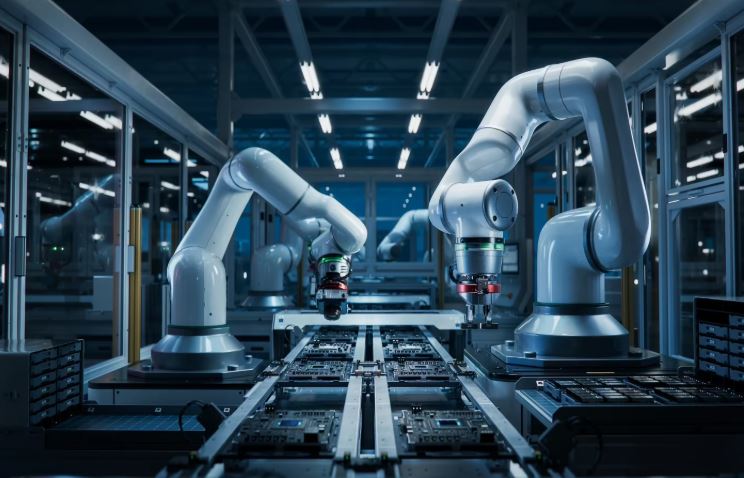
Industrial automation is transforming how modern factories operate, enabling higher efficiency, accuracy, and scalability. At the heart of this transformation lies industrial automation PCB assembly, a critical process that powers intelligent machines, robotics, control systems, and Industrial Internet of Things (IIoT) devices. As manufacturers move toward smart manufacturing and Industry 4.0, reliable and high-performance PCB assemblies are becoming more important than ever.
This article explores how industrial automation PCB assembly supports next-generation smart manufacturing, its key applications, benefits, challenges, and future trends.
Table of Contents
What Is Industrial Automation PCB Assembly?
Industrial automation PCB assembly refers to the manufacturing and assembly of printed circuit boards used in automated industrial equipment. These PCBs serve as the backbone of systems such as programmable logic controllers (PLCs), sensors, actuators, motor drives, robotics, and human-machine interfaces (HMIs).
Unlike consumer electronics, PCBs for industrial automation must operate in harsh environments, including high temperatures, vibration, dust, and electrical noise. Therefore, precision assembly, high-quality components, and rigorous testing are essential.
Role in Smart Manufacturing
Smart manufacturing relies on interconnected systems that collect data, communicate in real time, and make intelligent decisions. Industrial automation PCB assembly enables this ecosystem in several ways:
1. Real-Time Data Processing
Advanced PCB assemblies support high-speed processors and communication modules that allow machines to analyze production data instantly. This enables predictive maintenance, quality monitoring, and process optimization.
2. Machine-to-Machine Communication
PCBs integrated with industrial communication protocols such as Ethernet/IP, PROFINET, CAN bus, and Modbus allow seamless data exchange between machines, control systems, and cloud platforms.
3. Precision Control and Automation
Accurately assembled PCBs ensure reliable signal transmission and power management, which are crucial for robotics, CNC machines, and automated production lines.
Key Applications of Industrial Automation PCB Assembly
Industrial automation PCB assembly is widely used across multiple sectors:
- Robotics and Motion Control – PCBs control motors, sensors, and feedback systems for precise movements.
- Programmable Logic Controllers (PLCs) – Core control units that manage automated processes in factories.
- Industrial Sensors and IoT Devices – Enable real-time monitoring of temperature, pressure, vibration, and energy usage.
- Power Electronics and Motor Drives – Manage high voltage and current for industrial machinery.
- Smart Safety Systems – Support emergency shutdowns, monitoring, and compliance with safety standards.
Benefits of High-Quality PCB Assembly in Automation
Choosing the right industrial automation PCB assembly partner provides several advantages:
Enhanced Reliability
High-quality assembly reduces the risk of system failure, downtime, and costly repairs, ensuring continuous operation in demanding environments.
Improved Efficiency
Optimized PCB designs and precise assembly improve system performance, reducing energy consumption and increasing productivity.
Scalability and Flexibility
Well-designed PCB assemblies allow manufacturers to easily upgrade or expand automation systems as production needs grow.
Compliance with Industry Standards
Professional PCB assembly ensures compliance with IPC, ISO, RoHS, and other industrial and safety standards.
Challenges in Industrial Automation PCB Assembly
Despite its importance, industrial automation PCB assembly comes with unique challenges:
- Complex Designs – Multi-layer boards with high-density components require advanced assembly techniques.
- Harsh Operating Conditions – PCBs must withstand temperature extremes, moisture, vibration, and electromagnetic interference.
- Long Product Lifecycles – Industrial systems often remain in use for decades, requiring durable components and consistent quality.
- Strict Quality Requirements – Even minor defects can lead to significant production losses.
To overcome these challenges, manufacturers rely on automated assembly lines, surface-mount technology (SMT), through-hole assembly, and extensive testing such as AOI, X-ray inspection, and functional testing.
Future Trends in Industrial Automation PCB Assembly
As smart manufacturing continues to evolve, several trends are shaping the future of industrial automation PCB assembly:
Integration of AI and Edge Computing
PCBs are increasingly designed to support AI processors and edge computing, enabling faster decision-making directly on the factory floor.
Miniaturization and High-Density Boards
Compact designs with higher functionality are driving demand for advanced PCB layouts and micro-assembly techniques.
Increased Use of Industrial IoT
More sensors and connected devices mean higher demand for reliable, communication-ready PCB assemblies.